







Learn what gives a non-alcoholic hazy IPA its juicy aroma, cloudy appearance and smooth hop flavor, and how it differs from other IPAs.
The style is known for a cloudy appearance, expressive hop aroma and a softer approach to bitterness. The goal is not simply to make a non-alcoholic Hazy IPA. It is to create a complete, satisfying non-alcoholic beer with the flavor and character hazy IPA drinkers expect.
What makes a Hazy IPA, Hazy?
The haze comes from ingredients and brewing decisions that leave certain proteins, hop compounds, and yeast-derived material suspended in the liquid.
Brewers may use grains such as wheat or oats to help build the body and create the soft texture associated with the style. Generous hop additions contribute aroma and can also influence the brew’s appearance.
A hazy IPA is not cloudy because it is unfinished. When brewed intentionally, the haze is part of the flavor, texture and identity.
What does a non-alcoholic hazy IPA taste like?
Most hazy IPAs emphasize hop aroma over aggressive bitterness.
Depending on the hops used, you may notice notes and aromas that resemble:
- Citrus
- Pineapple
- Mango
- Peach
- Passion fruit
- Melon
- Fresh herbs or pine
These aromas are attributed to the hops rather than added fruit.
Compared with a West Coast-style IPA, a hazy IPA often feels softer, juicier and less sharply bitter. It can still have a noticeable hop finish, but the bitterness usually supports the aromatic character instead of dominating it.
How is a NA hazy IPA different from an alcoholic hazy IPA?
The primary difference is alcohol content.
Alcohol contributes body, flavor perception and aroma, making a satisfying non-alcoholic version technically challenging. Brewers must preserve the style’s hop character while avoiding excessive sweetness, thinness, or an unfinished flavor.
A successful non-alcoholic hazy IPA needs:
- Expressive hop aroma
- Enough body to support the hops
- Controlled bitterness
- A clean, complete finish
- Balance from the first sip to the last
The result should still feel recognizably like a hazy IPA rather than hop-flavored sparkling water or sweet malt soda.
Hazy IPA vs. traditional IPA
Although individual brews vary, these are the most common differences:
Hazy IPA |
Traditional or West Coast IPA |
|
Cloudy appearance |
Usually clearer |
|
Juicy, fruit-forward aroma |
Aromas of citrus, pine or resin may be more prominent |
|
Softer mouthfeel |
Crisper and drier |
|
Moderate, rounded bitterness |
More pronounced bitterness |
|
Frequently brewed with oats or wheat |
Often built around a cleaner malt profile |
Neither style is inherently better. They simply express hops differently.
Meet Free Wave Hazy IPA
Free Wave Hazy IPA is Athletic Brewing’s take on the style: juicy, aromatic and built to deliver a full-flavored hazy IPA experience while being non-alcoholic.
At the 2026 International Non-Alcoholic Competition, Free Wave earned a Silver Medal and 93 points, recognition that its waves of hop flavor stand up on an international stage.
Whether you already love hazy IPAs or are just beginning to explore hop-forward brews, it offers an easy way to see what the style is all about.
Frequently asked questions
Is a non-alcoholic hazy IPA bitter?
It can be, but hazy IPAs are generally less sharply bitter than traditional West Coast-Style IPAs. They tend to emphasize aroma, fruit notes, and a softer finish.
Does hazy IPA contain fruit?
Not necessarily. Hops can naturally produce aromas reminiscent of citrus, mango, pineapple and other fruits. Check the ingredient list for a specific style.
Should a hazy IPA be cloudy?
Yes. In an intentionally brewed hazy IPA, the cloudy appearance is a normal characteristic of the style.
Does a non-alcoholic hazy IPA contain alcohol?
Non-alcoholic beers contain less than 0.5% alcohol by volume.
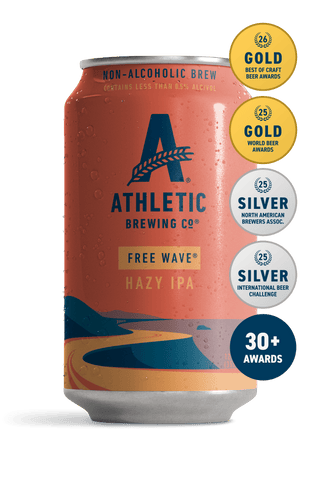
Free Wave
Free Wave is a hugely hoppy hazy IPA with a juicy body and velvety pour. A trio of Amarillo, Citra and Mosaic hops generate bodacious aromatics of tangerine and grapefruit. Notes of pine and florals emerge in the secondary palate for an herbaceous reprieve in all the right places. It’s luscious, smooth, and highly aromatic.


 Your Privacy Choices


